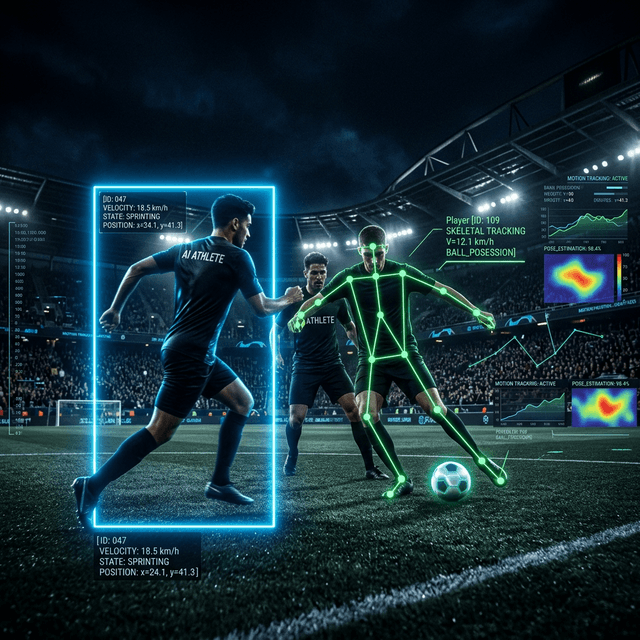
The sports analytics industry has moved lightyears beyond counting basic events. Today, elite performance analysts, broadcasters, and sports tech startups are building deep learning models that require 22-point skeletal pose estimation, 3D cuboids for volumetric tracking, and flawless Player Re-Identification (Re-ID) across multiple camera angles.
But there is a universal truth in machine learning: your computer vision model is only as intelligent as the platform and the people used to train it.
Sports data is notoriously difficult to label. It features extreme motion blur, dynamic lighting, and severe occlusion (like a 10-player pile-up in the penalty box during a corner kick). Standard, lightweight image annotators simply crash or fail to provide the temporal continuity required for video-heavy sports datasets.
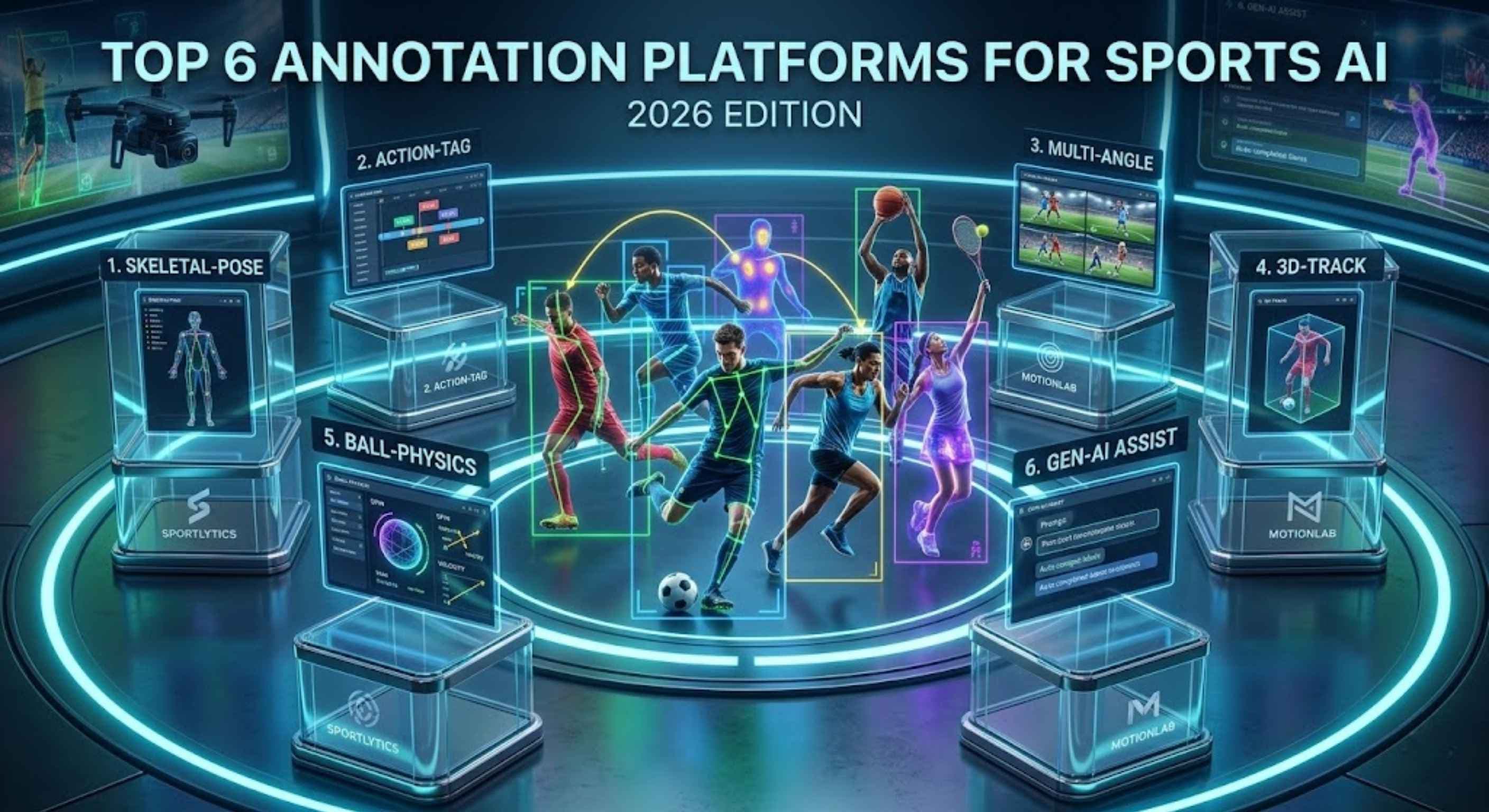
If you are building a sports AI model in 2026, you need an enterprise-grade annotation platform built for complex video, persistent ID tracking, and intricate hierarchical taxonomies.
Here is a deep dive into the top 6 annotation platforms for Sports AI, why they excel in the athletic domain, and what they cost.
What Makes an Annotation Platform "Sports-Ready"?
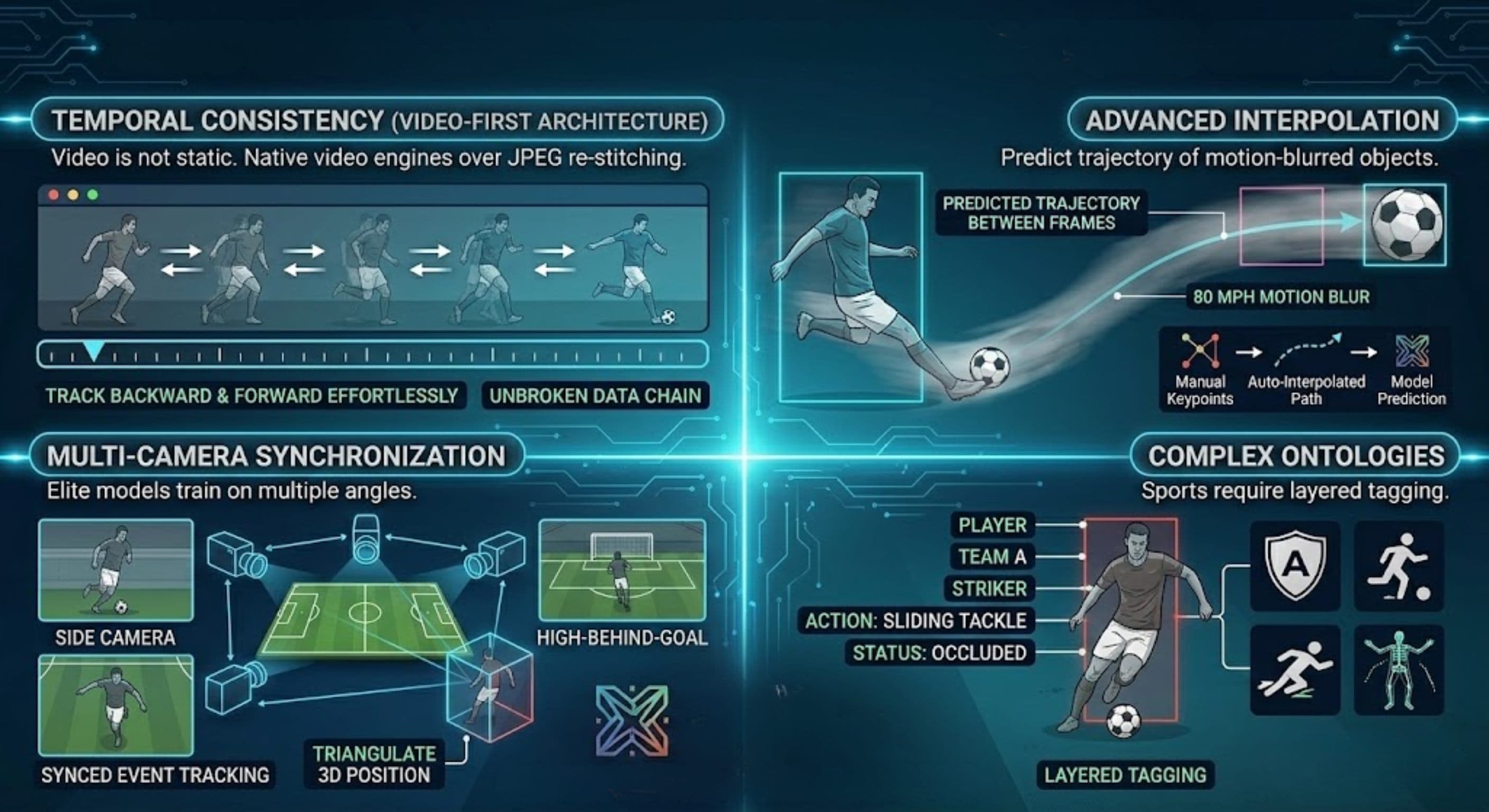
Before diving into the platforms, it is critical to understand the criteria that separate a generic labeling tool from a sports-ready powerhouse.
- Temporal Consistency (Video-First Architecture): Sports are not static. Platforms must allow annotators to track objects backward and forward through time effortlessly. If a platform relies on extracting video into individual JPEG frames and re-stitching them, it will ruin your data chain.
- Advanced Interpolation: When a football is kicked at 80 mph, it blurs. The platform must have advanced interpolation tools to predict the trajectory of a bounding box or keypoint between frames.
- Multi-Camera Synchronization: Elite models train on multiple angles of the same event. The platform must support syncing side, tactical, and high-behind-goal cameras so an annotator can triangulate a player's exact 3D position.
- Complex Ontologies: Sports require layered tagging. You aren't just labeling "Player." You are labeling "Player -> Team A -> Striker -> Action: Sliding Tackle -> Status: Occluded."
1. Encord
Best for: Native Video, Temporal Data, and Automated Micro-Models

Encord was built specifically for video and temporal data, making it an absolute heavyweight for sports AI. Unlike legacy platforms that struggle with large MP4 files, Encord processes video natively, allowing for buttery-smooth scrubbing and frame-perfect precision.
Why it excels in Sports AI:
Encord’s "micro-models" feature is a game-changer for sports. You can train a small, proprietary model on a handful of frames (e.g., tracking a specific basketball player's jersey number) and unleash it to auto-track that player across the rest of the clip. When dealing with the chaotic Re-ID problem of a crowded basketball paint or a football penalty box, Encord’s temporal tracking engine retains object IDs better than almost anyone else on the market. Furthermore, its ontology system is deeply customizable, allowing you to build the complex event taxonomies required for modern sports analytics.
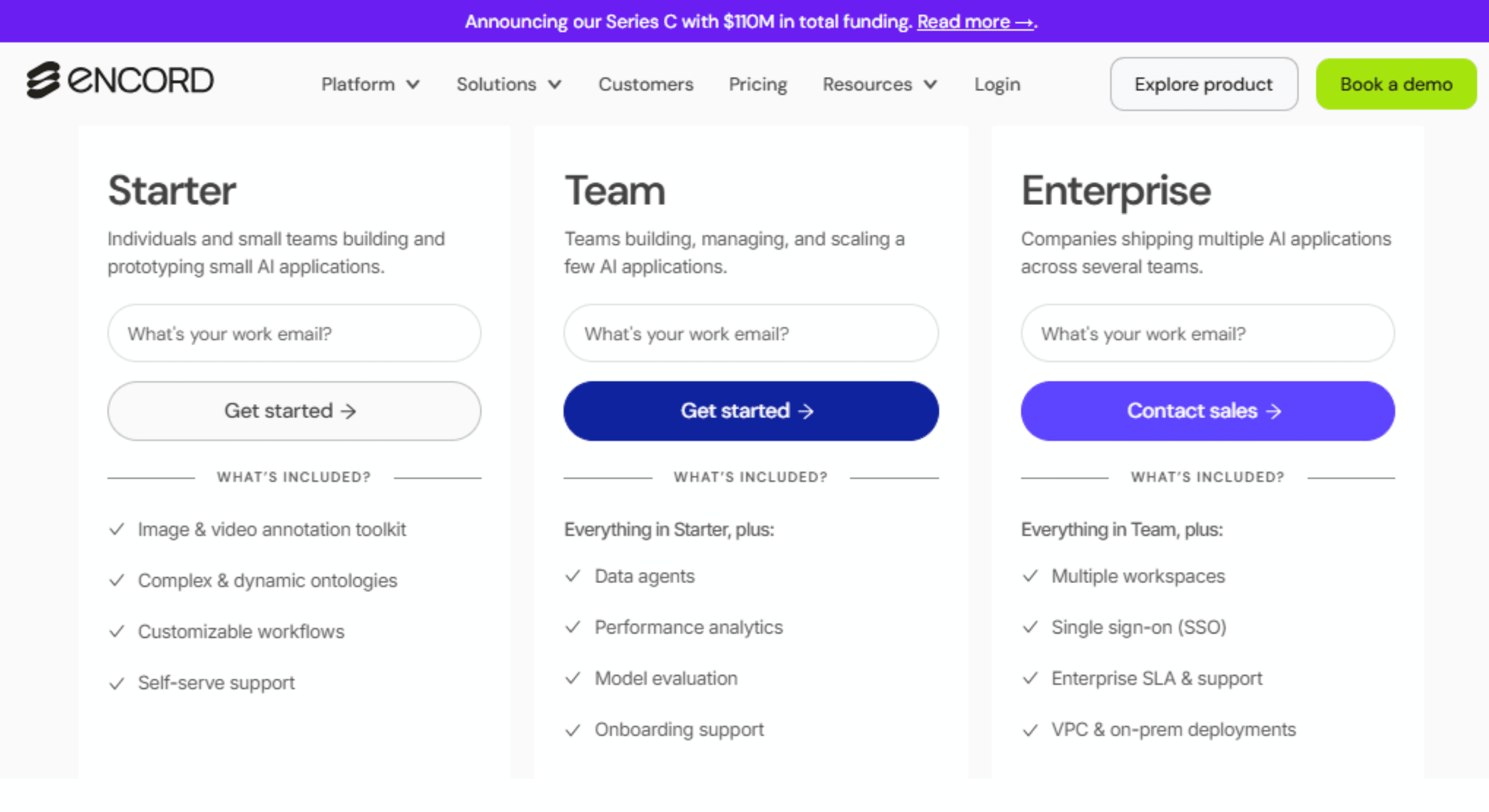
Pricing:
- Starter: Free for individuals and small tests.
- Team: Custom pricing (typically scales by user and data volume).
- Enterprise: Custom quotes (includes on-premise deployment, dedicated support, and advanced security). Source:https://encord.com/pricing/
2. Supervisely
Best for: Custom UI, Complex Ecosystems, and Heavy Image/Video Pipelines
Supervisely is less of a standard annotation tool and more of an "Operating System" for computer vision. It boasts a massive ecosystem of specialized apps that you can plug into your workspace. It handles heavy, long-term labeling pipelines with incredible stability.
Why it excels in Sports AI:
Sports data pipelines are rarely straightforward. You might need to run a pre-processing script to identify the pitch lines, followed by a pose-estimation model, followed by manual human QA. Supervisely allows you to string these custom apps together. Its interface is highly robust for detailed image and video work, allowing annotators to zoom in to the sub-pixel level to place 22-point skeletal keypoints accurately. It also handles multi-camera setups brilliantly, which is vital for calculating true 3D spatial data on a football pitch or a tennis court.
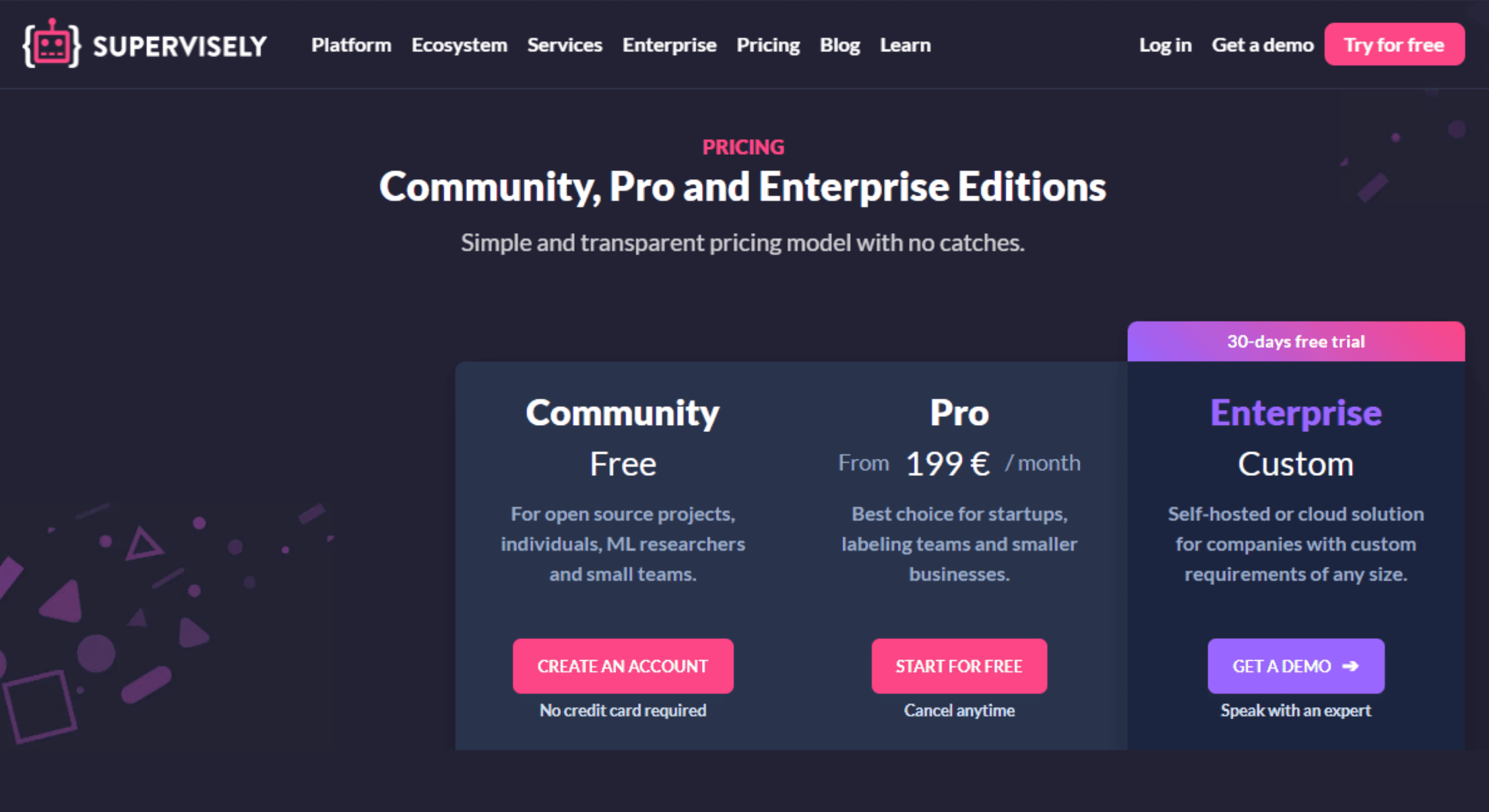
Pricing:
- Community Edition: Free (cloud-based, basic features).
- Enterprise Edition: Custom pricing based on node count and compute. Known for being highly competitive for teams that want to self-host to protect unreleased sports broadcast footage. Source: https://supervisely.com/pricing/
3. CVAT (Computer Vision Annotation Tool)
Best for: Open-Source Flexibility and Heavy Video Workloads
Originally developed by Intel, CVAT is the undisputed king of open-source video annotation. It is a rugged, developer-friendly workhorse that has become the backbone for countless computer vision teams globally, particularly for long-term video tracking projects.
Why it excels in Sports AI:
CVAT’s interpolation features are highly advanced. If you are tracking a winger sprinting down the sideline, you can annotate the first frame, skip 20 frames, annotate the last frame, and CVAT will smoothly interpolate the bounding box or skeleton across the gap. This dramatically speeds up sports annotation. Crucially, because it is open-source, sports teams and analytics companies can host CVAT entirely on-premise behind their own firewalls. When you are dealing with proprietary, pre-broadcast tactical footage, that level of data security is a strict requirement.
Pricing:
- Open Source: 100% Free (Self-hosted).
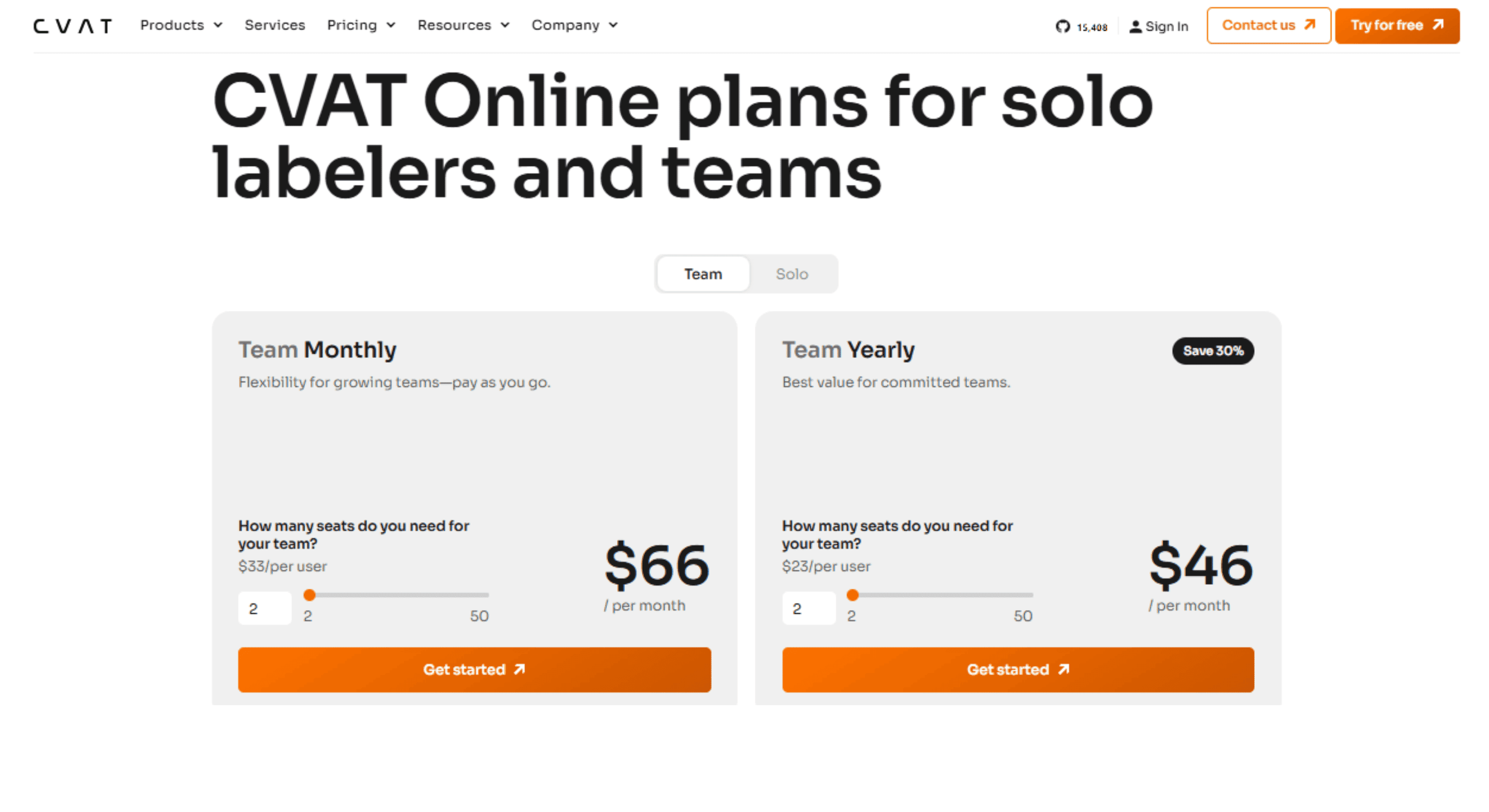
- CVAT.ai Cloud: Free tier available; paid tiers start around $30/user/month for cloud convenience, automated features, and team management. Source:https://www.cvat.ai/pricing/cvat-online#team
4. V7 (Darwin)
Best for: Pixel-Perfect Precision and Auto-Annotation

V7 has gained massive popularity for its sleek UI and incredibly powerful AI-assisted labeling. Their proprietary "Auto-Annotate" feature can generate pixel-perfect polygon masks around objects with a single click.
Why it excels in Sports AI:
While sports AI relies heavily on skeletal keypoints and bounding boxes, there is a growing demand for instance segmentation (e.g., masking the exact shape of a player's body to separate them from the stadium background for broadcast AR graphics). V7 makes this effortless. Furthermore, V7’s workflow management is incredibly intuitive. When human annotators are labeling high-speed sports action, V7’s sub-pixel accuracy ensures that the ground truth data is flawlessly tight around the athlete, reducing the "noise" that confuses downstream ML models.
Pricing:
- Academic/Free: Very limited, for non-commercial use.
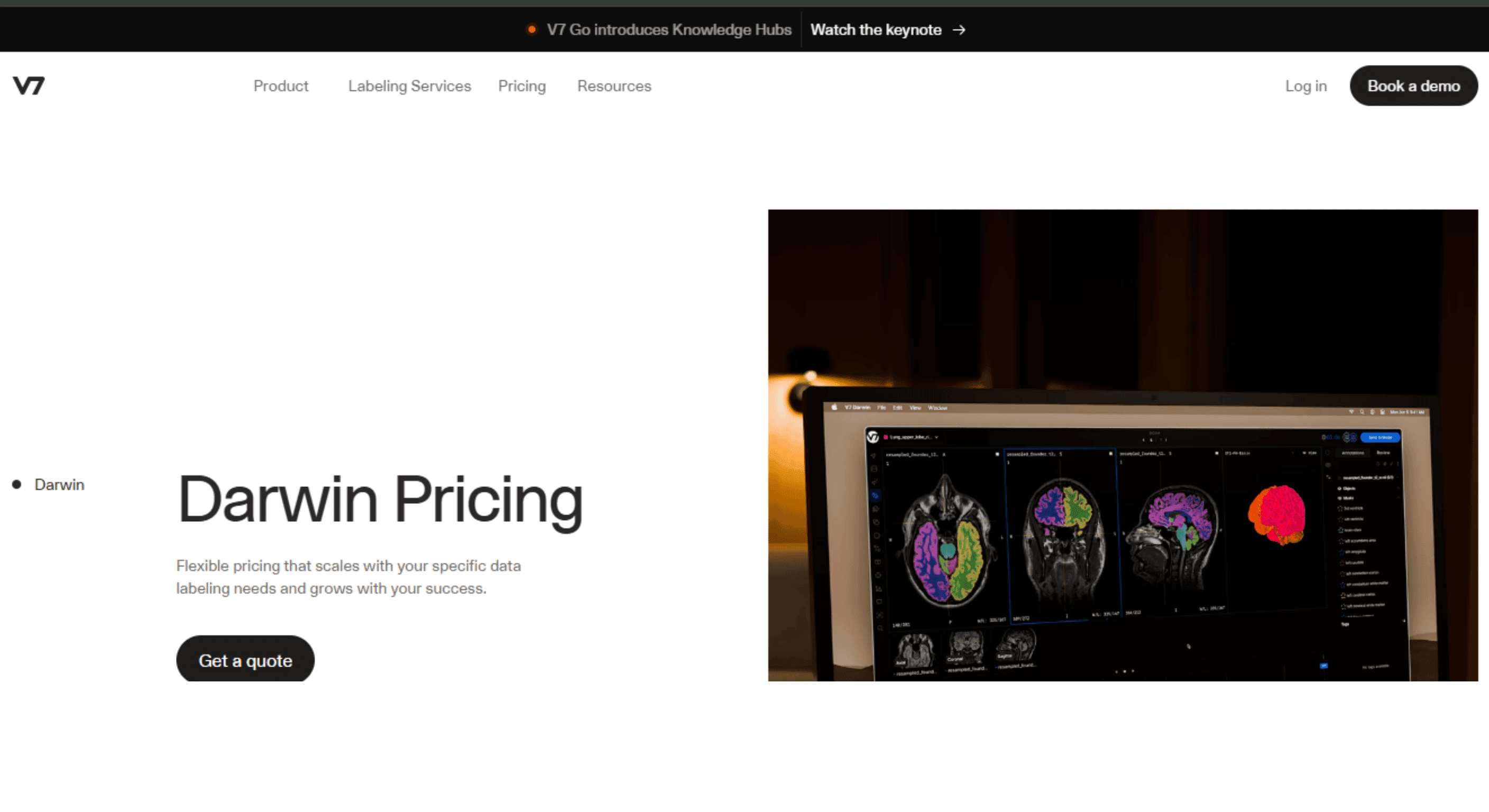
- Business: Starts at roughly $300/month (includes a pool of AI-assist credits and standard features).
- Enterprise: Custom pricing for high-volume data, advanced QA workflows, and priority support. Source: https://www.v7labs.com/darwin/pricing
5. Labelbox
Best for: Enterprise-Scale QA and Workforce Management
Labelbox is an absolute titan in the enterprise AI space. It is designed to act as a centralized training data platform, integrating data curation, annotation, and model diagnostics into a single cohesive loop.
Why it excels in Sports AI:
Sports annotation is rarely done by one person; it requires a massive, coordinated workforce. Labelbox’s "Foundry" and workforce management tools are arguably the best in the industry. It allows ML engineers to set up complex QA pipelines - such as requiring a "Consensus" where three different annotators must independently label the exact same sliding tackle. If their 22-point skeletal tracking doesn't align within a certain threshold, the task is flagged for a senior reviewer. This guarantees the 99%+ accuracy required to build predictive tactical models.
Pricing:
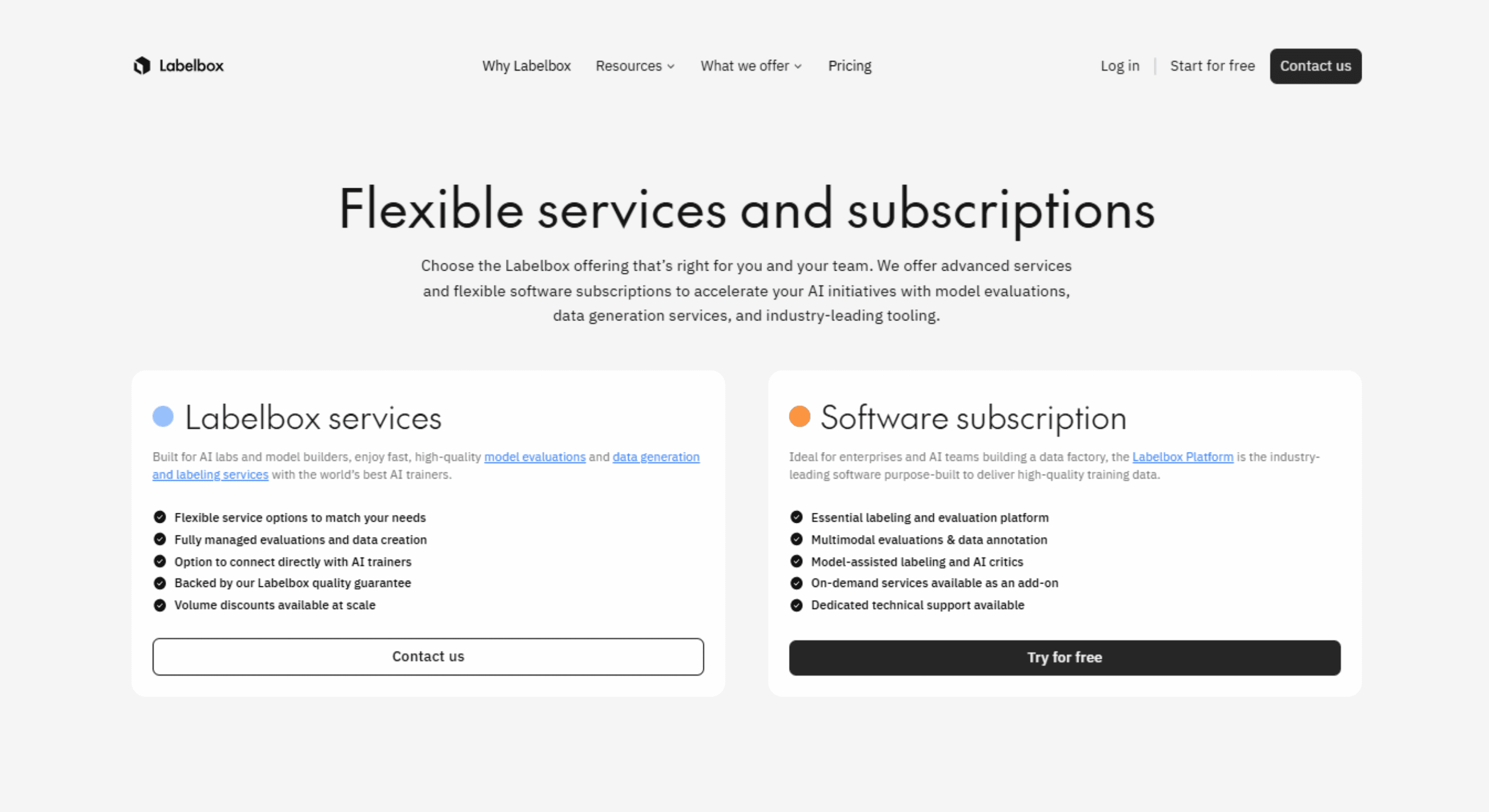
- Free Tier: Up to a certain number of labeled assets per year.
- Enterprise: Custom pricing. Labelbox is a premium product, and its pricing reflects its enterprise-grade security, analytics, and workforce management capabilities. Source:https://labelbox.com/pricing/
6. Roboflow
Best for: Rapid Prototyping, Active Learning, and Developer Experience
Roboflow takes a slightly different approach. Rather than just being an annotation tool, it is an end-to-end platform for building, deploying, and managing computer vision models.
Why it excels in Sports AI:
Roboflow is incredibly agile. If a sports tech startup needs to quickly prototype a model to detect when a basketball enters the hoop, Roboflow is the fastest way to get from raw video to a deployed API. Its active learning pipeline is brilliant for sports: you can train a base model, deploy it to infer on new match footage, and Roboflow will automatically funnel the model's "low confidence" guesses (e.g., when the ball is obscured by the net) back to human annotators for correction. This closed-loop system is highly efficient for iterating quickly during a sports season.
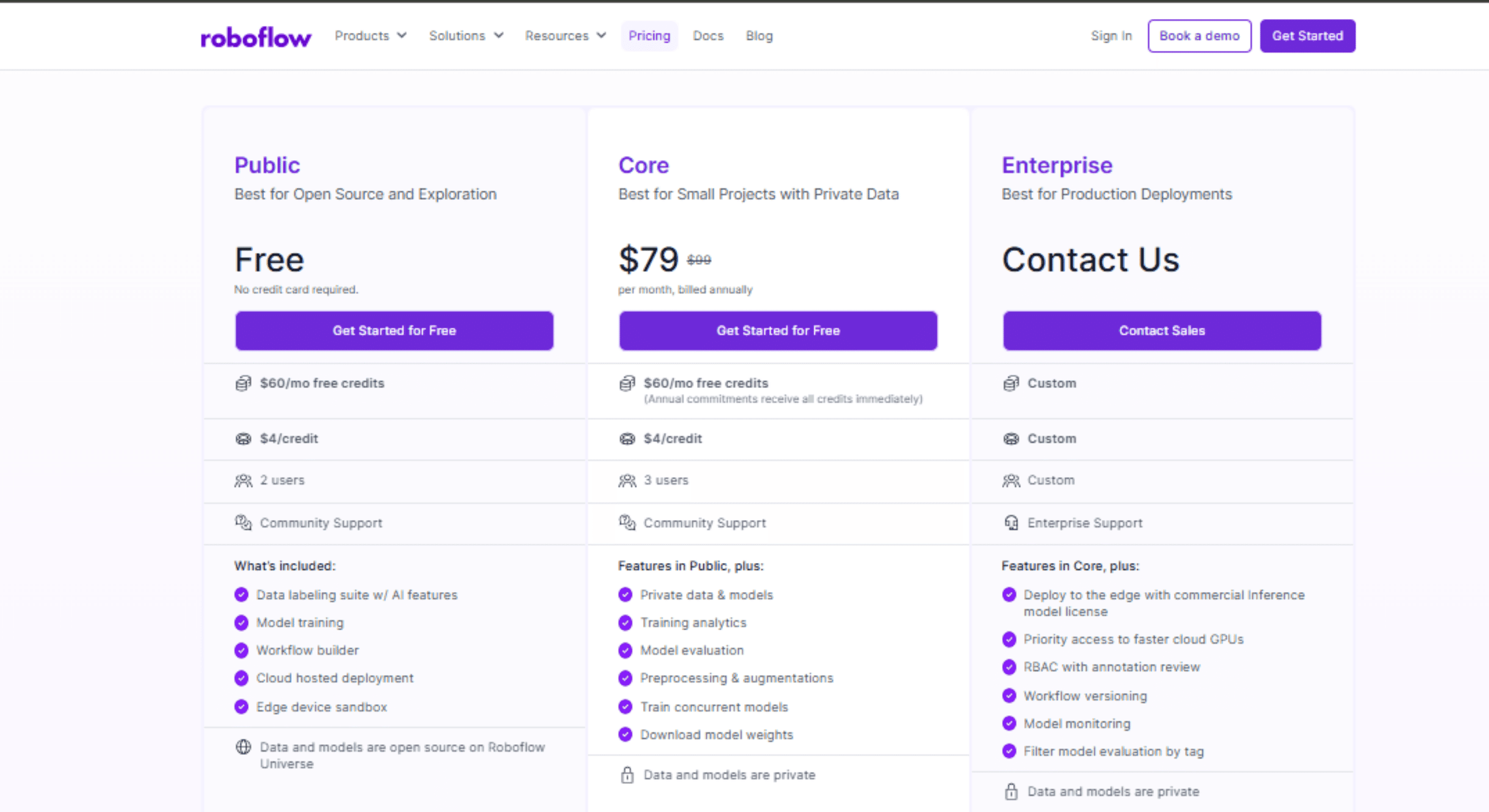
Pricing:
- Public: Free (but your dataset becomes public).
- Starter: ~$249/month (Private datasets, API access).
- Enterprise: Custom pricing for advanced deployment, on-prem, and massive scale. Source:https://roboflow.com/pricing
The Missing Link: The "Human Engine"
Choosing between Encord, Supervisely, CVAT, or Labelbox is only half the battle. A platform is just an engine; it needs fuel. The biggest bottleneck in Sports AI is not the software. It is the humans operating the software. If you put a generic, crowdsourced worker onto the most expensive enterprise platform in the world, they will still mislabel an offside trap, misinterpret a cricket delivery, or lose a player's ID during a crowded corner kick.
Automated tools and AI-assisted platforms still hallucinate when confronted with the motion blur and deep occlusion of elite sports. To reach the label quality those models need, you need domain experts reviewing what the automation produces.
This is where the Train Matricx fits into the ecosystem.
We are the human intelligence layer that powers these platforms. We are platform-agnostic ,whether your ML team operates on CVAT, Supervisely, Encord, or an in-house proprietary tool, our massive workforce of domain-expert annotators plugs directly into your UI.
We understand the biomechanics, the rules, and the physics of the game. We handle the brutal edge-cases of sports video annotation so your engineers can stop acting as data janitors and start building the future of sports analytics.
Conclusion
The sports AI market in 2026 is unforgiving. Relying on outdated bounding boxes or messy temporal tracking will cost you hundreds of thousands of dollars in wasted GPU compute. Whether you choose the video-native power of Encord, the open-source flexibility of CVAT, or the robust ecosystem of Supervisely, ensure you pair that world-class software with a world-class annotation workforce. The game is evolving. The data must evolve with it. At Train Matricx, we are building the infrastructure for that evolution. Ready to transform your sports data? Contact Train Matricx today and let's build the future of sports together.
Stop cleaning data. Start predicting.

Client results

“Train Matricx didn't just provide labeling — they became an extension of our team. With 6K+ football matches annotated and counting at 98% accuracy, they are our premier data partner.”

Billy Brush
Founder & CEO, Dark Horse AI
Don't take our word for it. Test the labels.
Send us the footage your current vendor gets wrong — the occluded players, the motion blur, the edge cases. We annotate it and return a QA report you can check frame by frame.
- Your hardest clip, annotated in 48 hours
- Full QA report with per-frame accuracy
- No commitment, no contract, no card